Key takeaways
- A self-employed furniture assembler in the US can charge about $34.06 to $43.00 an hour in 2026: the national median ($23.84) and 75th percentile ($30.10) wage of general maintenance and repair workers (BLS OEWS, May 2025) divided by 0.70.
- A nightstand is a 1-hour minimum job at about $35 to $43; a desk or a queen bed frame takes about 1 hour 15 minutes and costs $43 to $54.
- A 6-drawer dresser takes about 2 hours 15 minutes and costs $77 to $97; a large wardrobe about 3 hours 15 minutes, $111 to $140.
- Dressers, bookcases and wardrobes should be anchored to the wall: the CPSC Anchor It campaign warns that tip-overs injure and kill children.
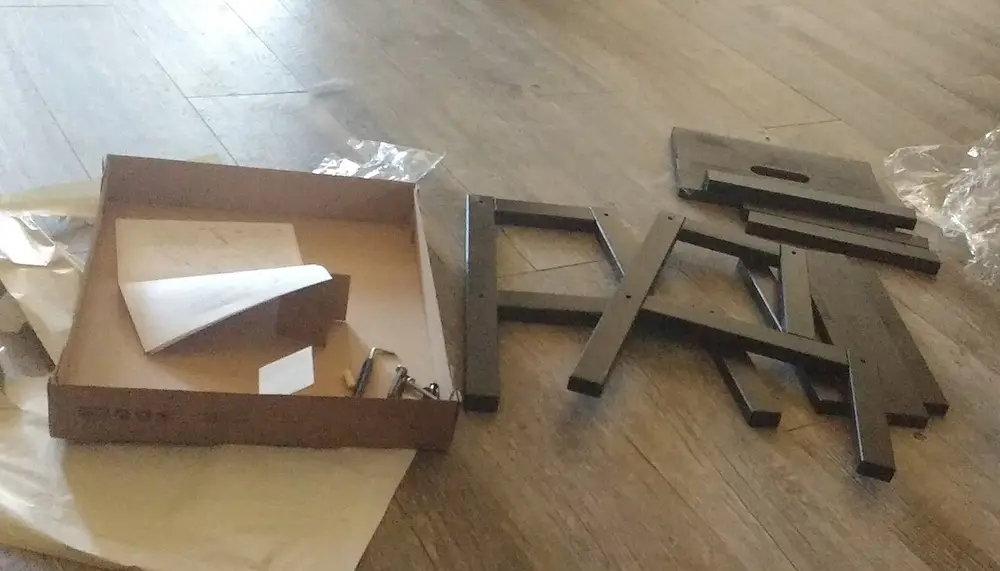

Assembling a flat-pack nightstand should cost about $35 to $43 in 2026, a desk or a queen bed frame about $43 to $54, and a 6-drawer dresser about $77 to $97. These prices apply a self-employed rate of $34.06 to $43.00 an hour, which is the national median ($23.84) and 75th percentile ($30.10) hourly wage of general maintenance and repair workers in the Bureau of Labor Statistics survey (May 2025) divided by 0.70, to the time each piece takes.
The odd job price calculator runs the same arithmetic with your own time, travel and state.
How the rate is built
The BLS has no separate wage for furniture assemblers working in homes. The closest occupation is general maintenance and repair workers (SOC 49-9071), people who do a little of everything with hand and power tools; LittleJob uses the same benchmark for handyman small jobs. An employee’s wage is only part of what a job costs: in June 2026, wages were 70.0% of private employer compensation costs (BLS Employer Costs for Employee Compensation). A self-employed assembler pays the rest alone, so the wage is divided by 0.70 (about 1.43 times).
| Percentile | Employee wage (BLS) | Self-employed equivalent (/ 0.70) |
|---|---|---|
| Median | $23.84 | $34.06 |
| 75th percentile | $30.10 | $43.00 |
What to charge per piece
Price = (minutes / 60) x hourly rate, rounded up to the dollar. Times are LittleJob estimates for flat-pack furniture of average difficulty, assembled by one person, and include 15 minutes for travel, unpacking and carrying out the packaging. Every visit has a 1-hour minimum. Hardware comes in the box, so there are no supplies in the price.
| Piece | Time | Price |
|---|---|---|
| Nightstand (1-hour minimum) | 1 h | $35 to $43 |
| Desk or queen bed frame | 1 h 15 min | $43 to $54 |
| 6-drawer dresser | 2 h 15 min | $77 to $97 |
| Large wardrobe with doors | 3 h 15 min | $111 to $140 |
Worked example for the dresser: 135 / 60 = 2.25 hours. 2.25 x $34.06 = $76.64, rounded up to $77. At $43.00: $96.75, so $97.
Several pieces in one visit share the 15 minutes of travel and packaging, so a bedroom set is cheaper than three separate visits. Ask for the brand and model number before quoting: the manufacturer’s instructions show the number of steps and parts, which is the best guide to time. Pieces with sliding doors, drawers on metal runners, or many cam locks take longer. Two-person items such as wardrobes and loft beds need a helper, priced per person.
What furniture assembly pays in the 10 most populous states
BLS May 2025 hourly wages of general maintenance and repair workers in the 10 largest states (Census Bureau, 2025 estimates), suggested self-employed rate and the price of a 6-drawer dresser (135 minutes):
| State | Median | 75th pct | Suggested hourly rate | 6-drawer dresser |
|---|---|---|---|---|
| California | $27.41 | $34.24 | $39.16 to $48.91 | $89 to $111 |
| Texas | $22.44 | $28.45 | $32.06 to $40.64 | $73 to $92 |
| Florida | $22.15 | $27.18 | $31.64 to $38.83 | $72 to $88 |
| New York | $27.79 | $33.48 | $39.70 to $47.83 | $90 to $108 |
| Pennsylvania | $23.70 | $29.70 | $33.86 to $42.43 | $77 to $96 |
| Illinois | $27.27 | $33.02 | $38.96 to $47.17 | $88 to $107 |
| Ohio | $25.68 | $30.65 | $36.69 to $43.79 | $83 to $99 |
| Georgia | $22.92 | $28.85 | $32.74 to $41.21 | $74 to $93 |
| North Carolina | $23.03 | $28.63 | $32.90 to $40.90 | $75 to $93 |
| Michigan | $22.87 | $28.60 | $32.67 to $40.86 | $74 to $92 |
The highest state medians for this occupation are in the District of Columbia ($29.00), Alaska ($28.97) and Minnesota ($28.46); the lowest in Arkansas ($20.87), Oklahoma ($20.55) and West Virginia ($18.70). Every state is on the pay by state page, and the methodology page explains the 0.70 factor and links the open data.
Anchor tall furniture every time
The Consumer Product Safety Commission’s Anchor It campaign puts it plainly: “Anchoring all furniture with drawers, doors, and shelves to the wall prevents tip-over injuries and deaths.” Most dressers and bookcases ship with an anti-tip kit. Offer to install it on every tall or drawer piece, find a stud or use anchors rated for the wall type, and note in writing if the customer declines. Ask before drilling into a rental’s walls.
Damage, tools and agreements
Work on a blanket or the flattened box to protect floors, and check the parts list before starting so a missing piece is the seller’s problem, not yours. Do not overtighten cam locks and screws in particleboard: stripped holes are hard to fix. If you use a cordless drill, set the clutch low.
A short service agreement or a text message should state the pieces, the price, the minimum and whether anchoring is included. General liability insurance covers damage to walls and floors; see licenses and insurance for odd jobs.
Teens, the law and taxes
Assembly with hand tools is a reasonable first job. For employers covered by the Fair Labor Standards Act, 14 and 15 year olds may not operate, tend or set up power-driven machinery (29 CFR 570.33(e)), so younger teens should leave power drills aside on paid jobs. See jobs for 14 and 15 year olds and safety for odd jobs.
Assembly income is self-employment income, and self-employment tax applies once net earnings reach $400 in a year. Read do you pay taxes on side jobs. This is general information, not legal or tax advice.
Mistakes to avoid
- Quoting without the model number, then discovering a 90-step wardrobe.
- Forgetting a minimum for single small pieces.
- Leaving a dresser unanchored without telling the customer why it matters.
- Assembling in the wrong room, then finding it does not fit through the door.
- Leaving the packaging behind when the customer expected you to take it.
Frequently asked questions
How much should I charge to assemble furniture in 2026?
About $34.06 to $43.00 an hour at the national level, the BLS median and 75th percentile wage of general maintenance and repair workers divided by 0.70. Quote per piece from your real time, with a 1-hour minimum per visit.
How much does it cost to assemble a dresser?
About $77 to $97 for a 6-drawer flat-pack dresser, which takes about 2 hours 15 minutes including travel and cleanup. Anchoring it to the wall takes a few more minutes and should be offered every time.
Should I charge per hour or per piece?
Customers prefer a price per piece. Build it from your hourly rate and the time each model really takes, and add a minimum so a single nightstand still covers your drive.
Can a teenager do furniture assembly for money?
Yes, with hand tools. For employers covered by federal law, 14 and 15 year olds may not operate power-driven machinery (29 CFR 570.33(e)), so a teen should use screwdrivers and Allen keys rather than power drills on paid jobs.
Sources and open data
- Occupational Employment and Wage Statistics (OEWS), May 2025 estimates, U.S. Bureau of Labor Statistics
- Employer Costs for Employee Compensation, June 2026, U.S. Bureau of Labor Statistics
- Anchor It!, U.S. Consumer Product Safety Commission
- 29 CFR 570.33, Occupations that are prohibited to minors 14 and 15 years of age, Legal Information Institute, Cornell Law School
- Get business insurance, U.S. Small Business Administration
- State Population Totals and Components of Change: 2020-2025, U.S. Census Bureau