Key takeaways
- A self-employed snow shoveler in the US can charge about $26.89 to $32.17 an hour in 2026: 1.43 x the national median ($18.82) and 75th percentile ($22.52) wage of landscaping and groundskeeping workers (BLS OEWS, May 2025).
- With LittleJob's time assumptions for about 4 inches of snow, that is $13 to $16 for a one-car driveway, $20 to $24 for a two-car driveway and $34 to $40 for a long double driveway, per storm.
- Heavy snow (8 inches or more) takes about 50% longer: about $30 to $36 for a two-car driveway.
- Snow shovel incidents sent an estimated 11,500 people a year to US emergency departments in 1990 to 2006; cardiac cases were 6.7% of them but included all 1,647 deaths recorded (American Journal of Emergency Medicine, 2011).
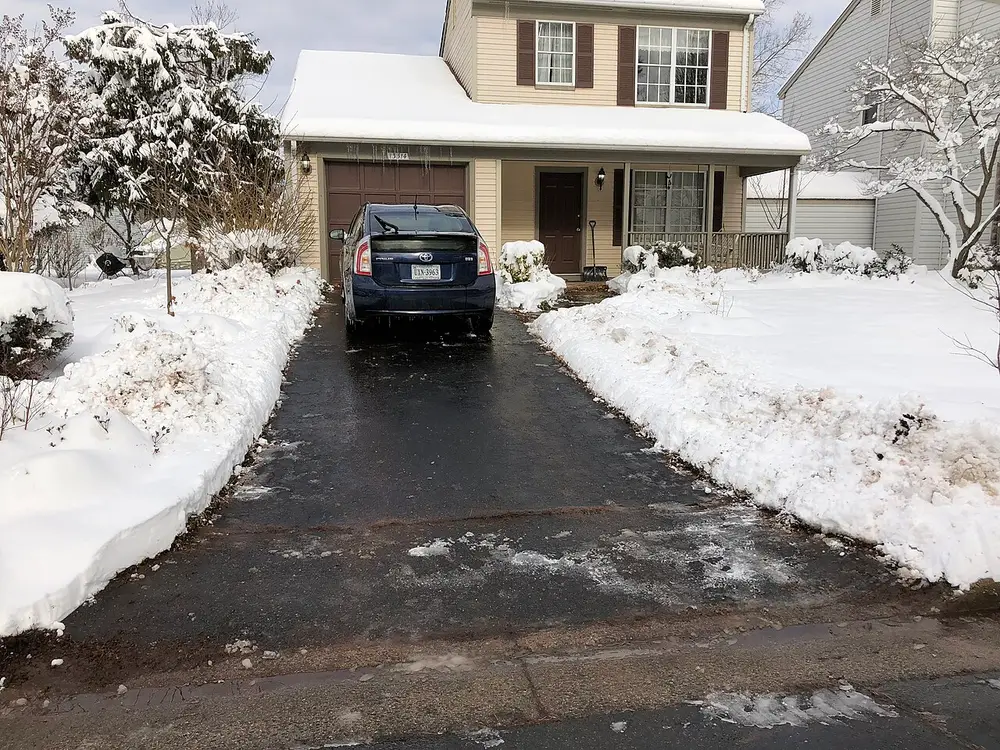

Shoveling a two-car driveway should cost about $20 to $24 per storm in 2026 for around 4 inches of snow, about $13 to $16 for a one-car driveway and $34 to $40 for a long double driveway. These prices apply a self-employed rate of $26.89 to $32.17 an hour, which is 1.43 times the national median ($18.82) and 75th percentile ($22.52) wage of landscaping and groundskeeping workers in the Bureau of Labor Statistics survey (May 2025), to stated time assumptions. Heavy snow takes longer and costs more.
The odd job price calculator reruns the numbers with your own time and travel.
How the snow shoveling rate is calculated
- Base wage. The BLS has no “snow shoveler” occupation. Landscaping and groundskeeping workers (code 37-3011) are the closest: the BLS Occupational Outlook Handbook notes that grounds workers take on winter tasks such as snow removal. National hourly wages, May 2025: $18.82 median, $22.52 at the 75th percentile.
- Self-employed loading. Wages are 70.0% of private employer compensation costs (BLS Employer Costs for Employee Compensation, June 2026), so LittleJob divides by 0.70, about x1.43: $26.89 to $32.17 an hour.
- Time per job. No public dataset measures shoveling speed, so the table uses working assumptions for about 4 inches of fluffy to average snow, including the front walk where noted and about 10 minutes of travel. Time yourself and adjust.
See the methodology page for the full reasoning.
Price per driveway size
| Job (about 4 inches of snow) | Area | Time assumed | Price at $26.89/h | Price at $32.17/h |
|---|---|---|---|---|
| One-car driveway | about 200 sq ft | 30 min | $13.44 | $16.09 |
| Two-car driveway and front walk | about 400 sq ft | 45 min | $20.16 | $24.13 |
| Long double driveway | about 800 sq ft | 75 min | $33.61 | $40.21 |
| Add: steps, path to back door | 15 min | $6.72 | $8.04 | |
| Two-car driveway, heavy snow (x1.5) | about 400 sq ft | 68 min | $30.25 | $36.19 |
Worked example for the two-car driveway: 45 minutes is 0.75 hour; 0.75 x $26.89 = $20.16 and 0.75 x $32.17 = $24.13. Quote $20 to $24.
What raises the time: wet, heavy snow; the ridge of packed snow the plow leaves at the end of the driveway; ice underneath; cars that must be cleared or moved; nowhere to throw the snow. Look at the job once before the first storm and note it.
Per storm vs seasonal contracts
Per storm. You charge each time you clear the driveway, with a stated trigger (for example “from 2 inches”) and a heavy-snow surcharge. Simple and fair for both sides.
Per visit within a storm. In a long storm you may need to come twice. Each visit is billed, possibly at a lower rate if the second pass is lighter.
Seasonal. One price for the winter. To set it, estimate the number of storms you will realistically clear and multiply. With a hypothetical 10 qualifying storms, a two-car driveway is 10 x $20 to $24 = $200 to $240. The client gets a fixed budget; you take the risk of a snowy year. Protect yourself with a cap (“up to 12 clearings, then per storm”) and get paid at least half up front.
Promise response times only if you can keep them. A client who leaves for work at 7 a.m. needs the driveway cleared before 7 a.m., which means starting early on storm mornings for every client on your list.
What snow shoveling pays in selected snowy states
Landscaping and groundskeeping workers (BLS, May 2025) in a selection of northern states, with the suggested hourly rate and the two-car driveway price (45 minutes):
| State | Median | Suggested hourly rate | Two-car driveway, per storm |
|---|---|---|---|
| Minnesota | $22.41 | $32.01 to $34.56 | $24 to $26 |
| Wisconsin | $19.82 | $28.31 to $32.59 | $21 to $24 |
| Michigan | $18.33 | $26.19 to $31.79 | $20 to $24 |
| New York | $21.56 | $30.80 to $33.33 | $23 to $25 |
| Massachusetts | $23.40 | $33.43 to $40.19 | $25 to $30 |
| Pennsylvania | $18.99 | $27.13 to $32.00 | $20 to $24 |
| Illinois | $21.05 | $30.07 to $32.26 | $23 to $24 |
| Ohio | $18.38 | $26.26 to $31.34 | $20 to $24 |
| Colorado | $22.00 | $31.43 to $33.57 | $24 to $25 |
| Maine | $22.10 | $31.57 to $33.21 | $24 to $25 |
| Vermont | $22.23 | $31.76 to $33.99 | $24 to $25 |
| New Hampshire | $21.58 | $30.83 to $34.67 | $23 to $26 |
Every state is on the pay by state page.
Heart strain and injuries: a real risk
Shoveling is heavy exercise in the cold. An analysis of the CPSC’s National Electronic Injury Surveillance System estimated 195,100 snow shovel-related emergency department visits in 1990 to 2006, about 11,500 a year. Acute musculoskeletal exertion caused 53.9% of them, slips and falls 20.0%, and being struck by a shovel 15.0%; the lower back was the most injured area (34.3%). Cardiac cases were 6.7% of visits but included all 1,647 deaths in the study.
A Quebec study of 128,073 hospital admissions and 68,155 deaths from heart attack (1981 to 2014) found that, among men, 20 cm of snowfall (about 8 inches) was associated with 16% higher odds of hospital admission and 34% higher odds of death from a heart attack the next day, compared with no snow. No such link was found among women.
The American Heart Association advises:
- People with heart disease risk factors (sedentary lifestyle, obesity, smoking, diabetes, high cholesterol or blood pressure) should be careful; people who have had a heart attack, stroke, bypass surgery or angioplasty should not shovel.
- Push snow rather than lifting and throwing it, work at a relaxed pace and take short breaks.
- Stop immediately with chest pain or pressure, lightheadedness or palpitations, and call 911 if symptoms do not go away.
This is a reason to hire someone, which is good for business, and a reason to look after yourself: warm up, push rather than lift, and do not take on more driveways than you can clear safely. More in safety for odd jobs.
Ice melt: use less, and charge for it
Salt is a material cost, so bill it separately or include a fixed amount. The Minnesota Pollution Control Agency’s Smart Salting guidance gives useful numbers for homeowners and contractors:
- “It only takes 1 teaspoon of salt to permanently pollute 5 gallons of water.”
- Dry sodium chloride (rock salt) is only effective at pavement temperatures above 15 degrees F.
- Worked example from the manual: at 20 degrees F and rising, dry salt at about 2.25 lbs per 1,000 sq ft, so about 4.5 lbs for 2,000 sq ft. For a 400 sq ft driveway, that is about 0.9 lb.
Shovel first; salt only what remains, and sweep up visible leftover salt on dry pavement. Ask clients with pets or new concrete what they want used.
Teens, the law and taxes
Shoveling for neighbors is a classic winter job for teens. For employers covered by federal child labor law, 14 and 15 year olds may not operate power-driven machinery (29 CFR 570.33(e)), which covers a snow blower; a hand shovel is fine. See jobs for 14 and 15 year olds. Shoveling income is self-employment income; see taxes for teens with odd jobs. This is general information, not legal or tax advice.
Mistakes to avoid
- Quoting the same price for 2 inches of powder and 10 inches of wet snow.
- Selling a seasonal contract without a cap on the number of clearings.
- Leaving the plow ridge at the end of the driveway.
- Using a whole bag of salt where a pound would do.
Frequently asked questions
How much should I charge to shovel a driveway?
About $20 to $24 per storm for a two-car driveway (about 400 sq ft) with around 4 inches of snow, at the national level in 2026. That assumes 45 minutes including the front walk and travel, at $26.89 to $32.17 an hour.
Should I charge per storm or for the whole season?
Per storm is simplest and fair when snowfall is unpredictable. A seasonal price gives the client a fixed budget and you guaranteed income, but you carry the risk of a snowy winter, so base it on a realistic number of storms and set a cap.
How much more should I charge for heavy snow?
Time drives the price. LittleJob assumes heavy or wet snow of 8 inches or more takes about 1.5 times as long, so a two-car driveway goes from about $20 to $24 to about $30 to $36.
Is shoveling snow dangerous for your heart?
It can be. The American Heart Association warns that people with heart disease risk factors should be careful, and those with a prior heart attack, bypass surgery or angioplasty should not shovel. A Quebec study found that a 20 cm (about 8 inch) snowfall was linked to a 34% higher odds of dying of a heart attack the next day among men.
How much salt should I use on a driveway?
Much less than most people use. Minnesota's Smart Salting guidance gives an example of about 2.25 lbs of dry salt per 1,000 sq ft at a 20 degree F pavement temperature, notes that dry rock salt only works above about 15 degrees F, and that 1 teaspoon of salt permanently pollutes 5 gallons of water.
Sources and open data
- Occupational Employment and Wage Statistics (OEWS), May 2025 estimates, U.S. Bureau of Labor Statistics
- Employer Costs for Employee Compensation, June 2026, U.S. Bureau of Labor Statistics
- Watson DS, Shields BJ, Smith GA. Snow shovel-related injuries and medical emergencies treated in US EDs, 1990 to 2006. Am J Emerg Med 2011;29(1):11-7, PubMed
- Auger N et al. Association between quantity and duration of snowfall and risk of myocardial infarction. CMAJ 2017;189(6):E235-E242, PubMed
- Snow shoveling can be hazardous to your heart (December 15, 2022), American Heart Association
- Smart Salting for Parking Lots and Sidewalks (August 2022), Minnesota Pollution Control Agency
- Grounds Maintenance Workers, Occupational Outlook Handbook, U.S. Bureau of Labor Statistics