Key takeaways
- Give an invoice or receipt for every job: the IRS lists invoices, receipt books and deposit information among the records that support gross receipts.
- All income from odd jobs is reportable, whether paid in cash, by check or through an app; payment apps may also send a Form 1099-K above federal thresholds.
- Keep records for at least 3 years from filing, and 6 years if you leave out more than 25% of your gross income (IRS).
- Free, open-source tools are enough: GnuCash for double-entry books and invoices, LibreOffice Calc for a simple income and expense sheet.
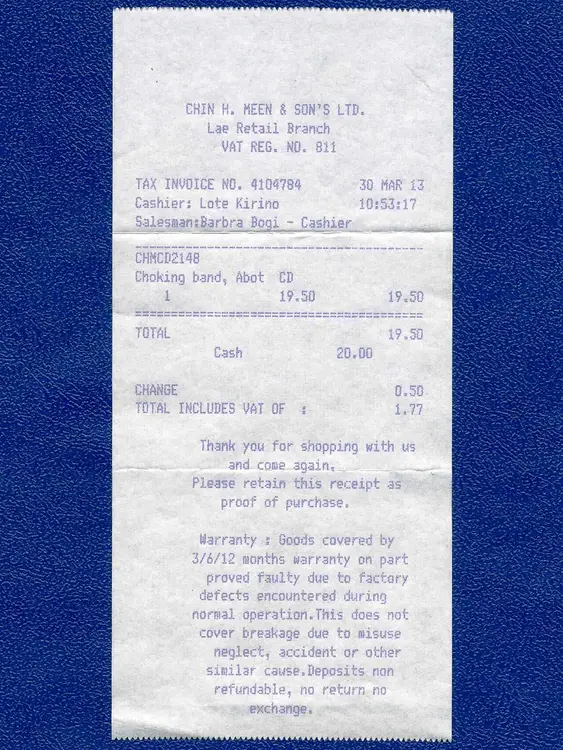

To get paid for an odd job without disputes, agree on the price and payment method before you start, give an invoice or receipt for every job, and log each payment the same day. The IRS accepts any record-keeping system that clearly shows your income and expenses, and asks you to keep the records for at least 3 years after you file (6 years if you leave out more than 25% of your income). A free spreadsheet in LibreOffice Calc, or the open-source accounting program GnuCash, is all a side gig needs in 2026.
Invoice or receipt: what is the difference?
An invoice asks for payment: you send it after the job (or at the end of the week or month for recurring work) and the customer pays by a due date. A receipt confirms that payment was received. For most odd jobs paid on the spot, a receipt is enough. For recurring customers billed weekly or monthly, send an invoice, then mark it paid.
Both are business records. The IRS lists invoices, receipt books and deposit information among the documents that support gross receipts.
What to put on an invoice
| Field | Example |
|---|---|
| Your name and contact | Your full name, phone, email |
| Invoice number | 2026-014 (number them in order) |
| Date of the invoice and of the work | Nov 18, 2026; work done Nov 15 |
| Customer name and address | The customer and the job address |
| Description | Leaf raking, front and back yard, 9 bags to curb |
| Quantity and rate | 2.5 h x $28, or 1 visit x $35 |
| Extras | Mileage, supplies at cost |
| Total and due date | $90, due Nov 25 |
| How to pay | Cash, check payable to your name, or app handle |
The total should follow the method in how to price odd jobs: labor including travel time, vehicle cost and supplies. The odd job price calculator gives you each line separately, which you can copy onto the invoice.
What to put on a receipt
Date, your name, customer name, the job, the amount, the payment method, and “Paid”. A numbered paper receipt book works. So does a text or email that says “Received $35 cash for mowing at 12 Oak St on Nov 15, 2026. Thank you.”
Cash, check or payment app?
| Method | Pros | Cons | Record you keep |
|---|---|---|---|
| Cash | Instant, no fees, accepted by everyone | No automatic record; risk of loss | Receipt copy plus your log |
| Check | Paper trail, no fee for you | Can bounce; deposit delay | Deposit record plus your log |
| Payment app or card | Fast, digital record, works when the customer has no cash | Possible fees; provider rules on personal vs business payments; may trigger Form 1099-K | App statement plus your log |
Fees change, so check them on each provider’s official fee page before you choose; LittleJob does not reproduce them here. Also check whether the provider asks you to use a business or “goods and services” setting for payments you receive for work.
All of it is income. Cash and app payments are both taxable, whether or not you receive a tax form. Payment apps and card processors may report your business payments to the IRS on Form 1099-K once they pass the federal threshold; Form 1099-NEC and 1099-K thresholds explains the current rules. Once your net earnings from self-employment reach $400, you also owe self-employment tax (IRS Topic 554); see do you pay taxes on side jobs.
When customers pay late
- State the due date on the invoice, and in your service agreement.
- Remind once, politely, the day after the due date, with the invoice attached.
- Pause service for recurring customers who are two visits behind.
- Ask for payment at the end of each visit for new customers, before you switch them to weekly or monthly invoices.
For small odd jobs, avoid deposits unless you buy materials for the customer; in that case, ask for the cost of materials up front.
Keeping records with free and open-source tools
The IRS does not require any particular software: you “may choose any recordkeeping system suited to your business that clearly shows your income and expenses.” Two free options:
- LibreOffice Calc is the free, open-source spreadsheet in the LibreOffice suite (The Document Foundation), available for Windows, macOS and Linux. One sheet is enough: date, customer, job, hours, amount, payment method, invoice number. A second sheet lists expenses: date, what you bought, amount, receipt reference.
- GnuCash is a free accounting program released under the GNU General Public License, with double-entry bookkeeping, customer records and invoices. It suits you once you have several regular customers or want a profit and loss report for Schedule C. Download it only from the official project site, gnucash.org.
Whatever tool you use, keep:
- Your income log and a copy of each invoice or receipt.
- Receipts for expenses: tools, supplies, fuel if you deduct actual costs.
- A mileage log if you drive to jobs: date, destination, purpose, miles. The side gig mileage calculator and the mileage deduction guide explain how the IRS 2026 rate (72.5 cents to June 30, 76 cents from July 1) applies.
- App and bank statements showing the deposits.
How long to keep them
| Situation | Keep records for |
|---|---|
| General rule | 3 years from the date you filed the return |
| You did not report income that is more than 25% of the gross income shown on the return | 6 years |
| Claim for a loss from worthless securities or a bad debt deduction | 7 years |
Source: IRS, “How long should I keep records?”
Mistakes to avoid
- Mixing personal and job money in the same app balance without a log.
- Skipping receipts for cash jobs, which leaves you with no income record at tax time.
- Rounding mileage from memory at the end of the year instead of logging trips.
- Assuming income below a 1099 threshold is not taxable.
Frequently asked questions
Do I need to give a receipt for babysitting or lawn mowing?
No federal rule requires a receipt for a small cash job, but giving one protects both sides and creates your own income record. A numbered receipt book or a text with the date, job and amount is enough.
Do I have to report cash payments from odd jobs?
Yes. Income is taxable whether you are paid in cash, by check or through an app, even if no tax form is issued. Self-employment tax applies once net earnings reach $400.
Should I accept payment apps for odd jobs?
They are convenient and leave a record, but check the provider's official fee page and use the account type meant for selling goods and services if the provider requires it. Payments for business may be reported to the IRS on Form 1099-K above the federal threshold.
What is the easiest way to keep records for a side gig?
A spreadsheet with one row per job (date, customer, job, amount, payment method) and one row per expense, plus a folder of receipts. GnuCash is a free option if you want full bookkeeping and invoices.
Sources and open data
- What kind of records should I keep, Internal Revenue Service
- How long should I keep records?, Internal Revenue Service
- Recordkeeping, Internal Revenue Service
- Topic no. 554, Self-employment tax, Internal Revenue Service
- LibreOffice Calc, The Document Foundation