Key takeaways
- Self-enrichment teachers, the BLS group that includes private music teachers, earn a median of $22.50 an hour and $30.39 at the 75th percentile (OEWS, May 2025).
- LittleJob suggests $32.14 to $43.41 per teaching hour for a self-employed music teacher in 2026.
- With 10 minutes of preparation and admin per lesson: about $21 to $29 for 30 minutes, $29 to $40 for 45 minutes and $37 to $51 for 60 minutes.
- A 30-minute home visit with 30 minutes of driving and 8 miles costs about $41 to deliver at $35 an hour, so travel fees matter more for short lessons.
- State medians range from $14.81 (Arkansas) to $31.94 (District of Columbia).
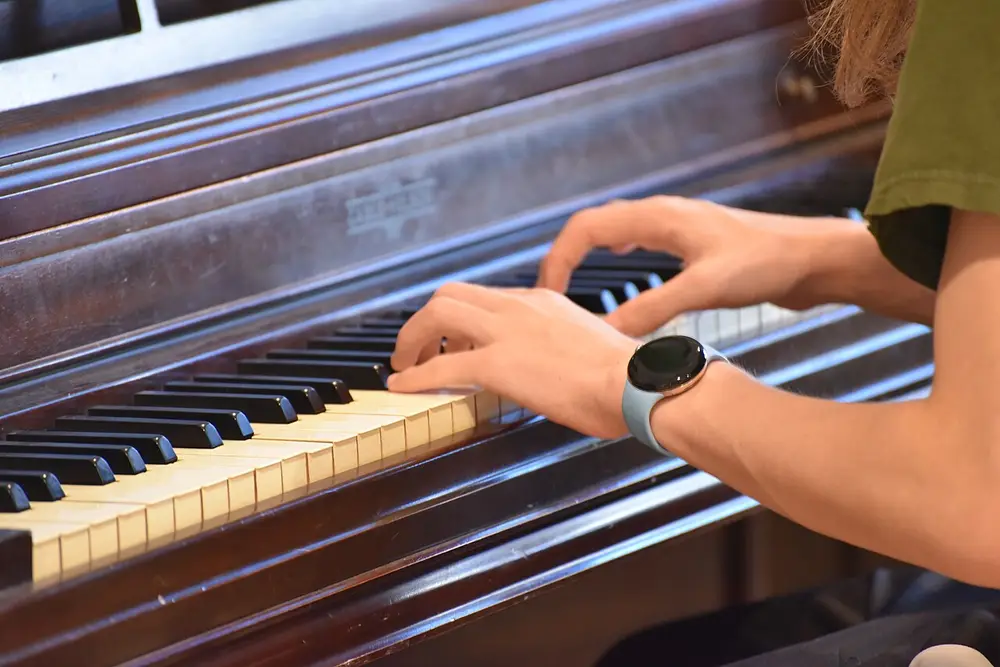

A self-employed music teacher in the US should charge about $21 to $29 for a 30-minute lesson, $29 to $40 for 45 minutes and $37 to $51 for an hour in 2026. These prices come from the BLS wage of self-enrichment teachers ($22.50 median, $30.39 at the 75th percentile, May 2025), multiplied by 1.43 to cover what an employer would pay on top of wages, which gives $32.14 to $43.41 per teaching hour, plus about 10 minutes of preparation and admin per lesson. Home visits need a travel fee on top.
The wage data behind music lesson prices
Private music teachers fall in the BLS occupation “self-enrichment teachers” (code 25-3021), which also covers art, dance, cooking and other non-degree classes. The survey counts 332,110 employees and excludes the self-employed. National hourly wages, May 2025:
| Percentile | Employee wage | Self-employed equivalent (x1.43) |
|---|---|---|
| 25th | $17.49 | $24.99 |
| Median | $22.50 | $32.14 |
| 75th | $30.39 | $43.41 |
| 90th | $44.63 | $63.76 |
Why 1.43: private employers spend $1 on wages for every $1.43 of total compensation (wages are 70.0% of employer costs, BLS, June 2026). A freelance teacher covers the difference alone: payroll taxes, no paid holidays, no paid cancellations. The methodology page explains the choice. Teachers with a music degree, performance credits or a waiting list can price toward the 90th percentile, about $64 an hour.
30, 45 and 60-minute lesson prices
A lesson is never only the minutes with the student. Picking pieces, answering parents and scheduling take time. LittleJob adds 10 minutes per lesson, so a 30-minute lesson is priced as 40 minutes of work.
| Lesson length | Paid time | Low (at $32.14/h) | High (at $43.41/h) |
|---|---|---|---|
| 30 minutes | 40 minutes | $21.43 | $28.94 |
| 45 minutes | 55 minutes | $29.46 | $39.79 |
| 60 minutes | 70 minutes | $37.50 | $50.65 |
Arithmetic for the first row: $32.14 x 40 / 60 = $21.43. Round to prices people remember: $22 or $25 for 30 minutes, $30 or $40 for 45, $40 or $50 for an hour. Beginners and young children usually start at 30 minutes; intermediate students move to 45 or 60.
Adding travel for home lessons
Driving to the student is where short lessons stop paying. Example with the odd job price calculator:
- Rate $35 an hour, lesson 0.5 hour, travel 30 minutes round trip.
- Labor: $35 x (0.5 + 0.5) = $35.00.
- Vehicle: 8 miles x $0.76 = $6.08 (IRS business rate from July 1, 2026; it was $0.725 from January to June).
- Total $41.08, quoted at $45.
The teaching part alone would be $17.50. Three ways to handle it: charge a flat travel fee (here about $20), require 45-minute minimums for home visits, or group students who live near each other on the same afternoon so the drive is shared. Your miles are also deductible; see the side gig mileage calculator.
Monthly tuition instead of pay-per-lesson
Many teachers bill a flat monthly amount. The cleanest method is yearly:
- Decide how many lessons a year you teach, for example 44 weekly lessons (leaving 8 weeks for holidays and summer).
- Price: 44 x $30 = $1,320 a year for 45-minute lessons.
- Monthly tuition: $1,320 / 12 = $110 a month, every month.
The student pays the same in February and in a five-week month, and you are not chasing per-lesson payments. Put the makeup lesson rule in writing (for example, one makeup per term with 24 hours notice). A simple service agreement is enough.
Music lesson pay in the 10 most populous states
Self-enrichment teacher wages by state (BLS OEWS, May 2025) and the suggested self-employed hourly range (1.43 x state median to 1.43 x 75th percentile):
| State | Median | 75th pct | Suggested hourly rate |
|---|---|---|---|
| California | $23.83 | $35.89 | $34.04 to $51.27 |
| Texas | $17.38 | $25.80 | $24.83 to $36.86 |
| Florida | $22.04 | $29.52 | $31.49 to $42.17 |
| New York | $27.78 | $40.35 | $39.69 to $57.64 |
| Pennsylvania | $20.07 | $25.99 | $28.67 to $37.13 |
| Illinois | $21.26 | $28.32 | $30.37 to $40.46 |
| Ohio | $17.96 | $23.07 | $25.66 to $32.96 |
| Georgia | $25.15 | $35.78 | $35.93 to $51.11 |
| North Carolina | $20.05 | $29.09 | $28.64 to $41.56 |
| Michigan | $19.40 | $26.85 | $27.71 to $38.36 |
Highest medians: District of Columbia ($31.94), New Hampshire ($28.79), New York ($27.78), Connecticut ($26.56). Lowest: Arkansas ($14.81), Delaware ($16.70), North Dakota ($16.88). To turn any state range into a lesson price, multiply the hourly figure by the paid time in the table above. All states: odd job pay by state.
What else affects the price
- Instrument and level. The BLS does not split by instrument. Supply does the work: in many towns, piano and guitar teachers are common, while harp, bassoon or jazz improvisation teachers are scarce and can charge more.
- Your studio. Teaching from home costs little; renting a room at a music store costs rent. Add it per lesson.
- Materials. Method books are usually bought by the student. Free and open tools help: MuseScore, open-source notation software, lets you write exercises and arrangements without a license fee.
- Recitals. If you organize one, a separate recital fee covering the venue is common and easier to explain than a price increase.
- Teen teachers. A high school musician teaching beginners sits nearer the 25th percentile, about $25 an hour, or $17 for a 30-minute lesson with preparation.
Taxes and paperwork
Lesson income is self-employment income. Once your net earnings reach $400 in a year you owe self-employment tax of 15.3% on top of income tax; the self-employment tax explained page walks through it and the do you pay taxes on side jobs guide covers reporting. Keep a log of lessons, payments and business miles from the start. This page is general information, not tax advice.
Mistakes to avoid
- Pricing 30 minutes at half an hour of wage. Preparation and messages are unpaid unless you count them.
- Driving to every student for the same price as studio lessons.
- No makeup policy. Free reschedules on demand quietly cut your hourly rate.
- Never raising prices. Review once a year against the new BLS data and announce changes a month ahead.
For the general method, see how to price odd jobs, and compare with tutoring rates, which follow the same logic.
Frequently asked questions
How much should I charge for a 30-minute music lesson?
About $21 to $29 in 2026 at your own studio or online. That is the LittleJob self-employed rate of $32.14 to $43.41 an hour applied to 40 minutes, the lesson plus about 10 minutes of preparation and scheduling.
How much do piano lessons cost per hour?
An hour-long lesson works out to about $37 to $51 with preparation time included, based on BLS wages for self-enrichment teachers. Teachers with degrees, long waiting lists or high-cost metro areas sit above that range.
Should I charge more for lessons at the student's home?
Yes. Driving time and vehicle cost can nearly double the cost of a 30-minute lesson, so add a travel fee or book several students in the same area back to back.
Should students pay per lesson or per month?
Monthly tuition based on a fixed number of lessons per year is more stable for both sides. Divide the yearly total by 12 so every month costs the same, and state your makeup lesson policy in writing.
Sources and open data
- Occupational Employment and Wage Statistics (OEWS), May 2025 estimates, U.S. Bureau of Labor Statistics
- Employer Costs for Employee Compensation, June 2026, U.S. Bureau of Labor Statistics
- Standard mileage rates, Internal Revenue Service
- Self-Employment Tax (Social Security and Medicare Taxes), Internal Revenue Service
- MuseScore, free and open-source music notation software, MuseScore