Key takeaways
- Garden help in the US is worth about $26.89 to $32.17 an hour for a self-employed worker in 2026: 1.43 x the national median ($18.82) and 75th percentile ($22.52) wage of landscaping and groundskeeping workers (BLS OEWS, May 2025).
- A 90-minute weeding session comes to about $40 to $48; spreading 2 cubic yards of mulch (about 3 hours) to $81 to $97, plus the mulch.
- Planting a dozen perennials in prepared beds, about 2 hours, costs $54 to $64 in labor.
- One cubic yard of mulch covers 108 sq ft at 3 inches deep (27 cubic feet divided by 0.25 ft), a number worth checking before you quote.
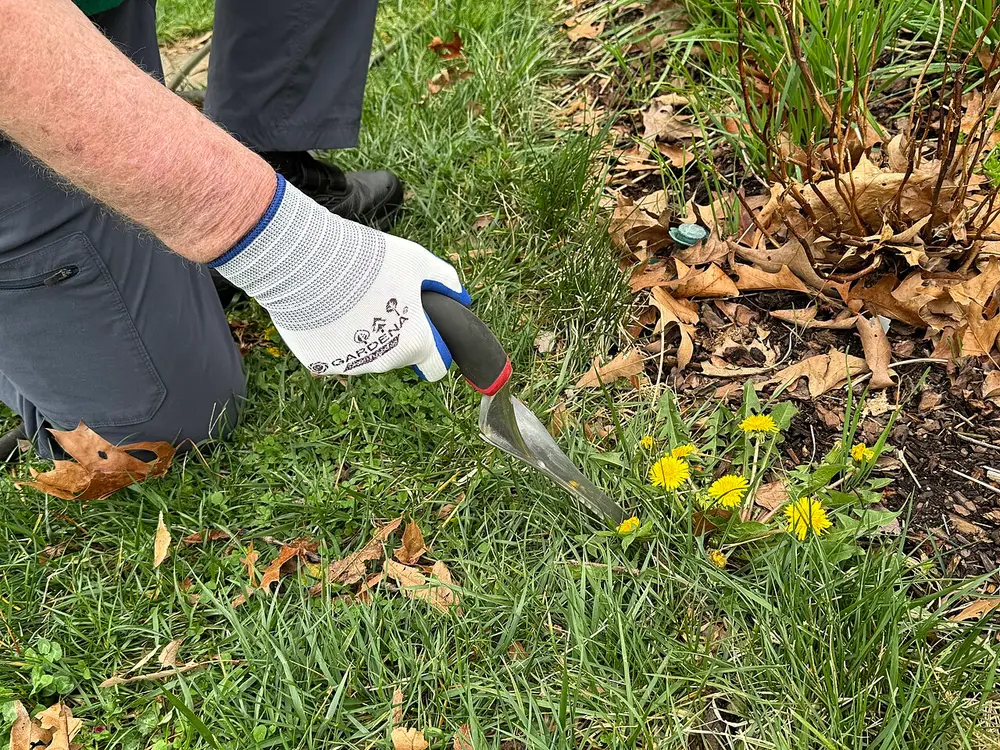

Weeding and general garden help should cost about $27 to $32 an hour in 2026 in the US, so about $40 to $48 for a 90-minute weeding session and $81 to $97 in labor to spread 2 cubic yards of mulch. The rate is 1.43 times the national median ($18.82) and 75th percentile ($22.52) wage of landscaping and groundskeeping workers in the Bureau of Labor Statistics survey (May 2025): $26.89 to $32.17 an hour. Materials such as mulch, compost and plants are billed separately, at cost.
The odd job price calculator adds travel, supplies and your state to these numbers.
How the garden help rate is calculated
- Base wage. BLS OEWS, landscaping and groundskeeping workers (code 37-3011). It is the occupation that does mowing, planting and bed maintenance for pay. National hourly wages, May 2025: $17.40 at the 25th percentile, $18.82 median, $22.52 at the 75th percentile.
- Self-employed loading. Wages are 70.0% of private employer compensation costs (BLS Employer Costs for Employee Compensation, June 2026). Dividing by 0.70, about x1.43, gives $26.89 to $32.17 an hour.
- Time. Garden jobs vary too much for a per-square-foot price. Quote hours, based on a look at the garden, and state the assumption.
The methodology page explains why the range stops at the 75th percentile.
Price examples for weeding, mulching and planting
Times below are LittleJob working assumptions for one person with hand tools, including about 10 minutes of travel and cleanup. Replace them with your own once you have done a few jobs.
| Job | Time assumed | Labor at $26.89/h | Labor at $32.17/h | Materials |
|---|---|---|---|---|
| Weeding established beds | 1 h 30 min | $40.33 | $48.26 | none |
| Weeding a neglected garden | 3 h | $80.66 | $96.51 | yard-waste bags |
| Spreading 2 cubic yards of mulch | 3 h | $80.66 | $96.51 | mulch at cost |
| Spreading 4 cubic yards of mulch | 5 h 30 min | $147.87 | $176.94 | mulch at cost |
| Planting 12 perennials in prepared beds | 2 h | $53.77 | $64.34 | plants, compost |
| Planting 6 shrubs (digging holes) | 2 h 30 min | $67.21 | $80.43 | shrubs, compost |
| Monthly maintenance visit | 1 h | $26.89 | $32.17 | none |
Worked example for the neglected garden: the exact low rate is $18.82 / 0.70 = $26.886, and 3 x $26.886 = $80.66; at the top, 3 x $32.17 = $96.51. Quote $81 to $97, plus bags.
A one-hour monthly visit is cheap for the client but your travel eats into it. A minimum visit charge of one hour protects you on small jobs.
Mulch math: how much and how long
Mulch is sold by the cubic yard (27 cubic feet) or in bags of 2 or 3 cubic feet. Coverage is simple geometry:
Area covered (sq ft) = cubic feet / depth in feet
- At 3 inches (0.25 ft): 1 cubic yard covers 27 / 0.25 = 108 sq ft.
- At 2 inches (0.167 ft): 1 cubic yard covers about 162 sq ft.
- A 10 ft x 20 ft bed (200 sq ft) at 3 inches needs 200 x 0.25 = 50 cubic feet, about 1.9 cubic yards, or 25 bags of 2 cubic feet.
Agree on the depth with the client before ordering. Moving bulk mulch from the driveway to the beds by wheelbarrow is most of the work, so the distance matters more than the bed size. Bags are faster to carry but cost more per cubic foot.
Weeding: by the hour, not by the weed
Weeding speed depends on the weeds (seedlings vs deep-rooted perennials), the soil (dry clay vs moist loam) and how dense the beds are. That is why hourly pricing is the honest default:
- Visit first, or agree on a first session at the hourly rate, then estimate the next ones.
- Ask what the client wants pulled; some “weeds” are plants they like.
- Remove roots, not just tops, or the job comes back in two weeks.
- Agree on where the weeds go: compost pile, yard-waste bags or the city’s yard-waste collection. Yard trimmings are a large waste stream (the EPA estimates 35.4 million tons generated in 2018), and many local programs collect them separately; follow local rules.
Weed killer. Applying pesticides for pay can require a state pesticide applicator license, even for common products. Check with your state department of agriculture before offering chemical weeding; hand weeding, hoeing and mulch avoid the question.
What garden help pays in the 10 most populous states
BLS May 2025 wages of landscaping and groundskeeping workers in the 10 largest states (Census Bureau, 2025 estimates), with the suggested hourly rate and the price of a 2-hour job:
| State | Median | 75th pct | Suggested hourly rate | 2-hour job |
|---|---|---|---|---|
| California | $21.90 | $24.27 | $31.29 to $34.67 | $63 to $69 |
| Texas | $17.66 | $19.84 | $25.23 to $28.34 | $50 to $57 |
| Florida | $17.84 | $20.99 | $25.49 to $29.99 | $51 to $60 |
| New York | $21.56 | $23.33 | $30.80 to $33.33 | $62 to $67 |
| Pennsylvania | $18.99 | $22.40 | $27.13 to $32.00 | $54 to $64 |
| Illinois | $21.05 | $22.58 | $30.07 to $32.26 | $60 to $65 |
| Ohio | $18.38 | $21.94 | $26.26 to $31.34 | $53 to $63 |
| Georgia | $18.25 | $21.33 | $26.07 to $30.47 | $52 to $61 |
| North Carolina | $18.22 | $21.40 | $26.03 to $30.57 | $52 to $61 |
| Michigan | $18.33 | $22.25 | $26.19 to $31.79 | $52 to $64 |
The highest suggested rates are in Massachusetts ($33.43 to $40.19) and the District of Columbia ($33.51 to $38.29); the lowest in Mississippi ($21.73 to $25.70). Every state is on the pay by state page.
How to quote garden help
- Walk the garden with the client and list the tasks: weeding, edging, mulching, planting, deadheading, hauling.
- Estimate hours per task and multiply by your rate.
- List materials separately (mulch, compost, plants, bags) and decide who buys them.
- Offer a recurring visit (every two or four weeks) at the same hourly rate, so the garden never gets back to the “neglected” line of the table.
- Write it down in a simple service agreement.
Mowing is usually a separate line; see lawn mowing prices and the lawn mowing price calculator. In autumn, see leaf raking prices.
Teens, safety and taxes
Weeding and mulching with hand tools are suitable first jobs. For employers covered by federal child labor law, 14 and 15 year olds may do grounds maintenance but not with power-driven mowers, cutters, trimmers or edgers (29 CFR 570.34(h)); see jobs for 14 and 15 year olds. States can be stricter.
Wear gloves, kneel on a pad, lift mulch bags with your legs, and ask about thorny or irritating plants before you start. Garden help income is self-employment income; see do you pay taxes on side jobs. This is general information, not legal or tax advice.
Mistakes to avoid
- Quoting a fixed price for a garden you have not seen.
- Including mulch or plants in your hourly rate instead of billing them.
- Pulling plants the client wanted to keep.
- Offering weed killer without checking licensing rules.
Frequently asked questions
How much should I charge for weeding per hour?
About $27 to $32 an hour at the national level in 2026, which is 1.43 times the BLS median and 75th percentile wages of landscaping and groundskeeping workers. In lower-wage states such as Mississippi the same method gives about $22 to $26, in Massachusetts about $33 to $40.
How much does it cost to have someone weed a garden?
It depends on time. A 90-minute session on established beds costs about $40 to $48 at the national rate; a neglected garden that takes 3 hours costs about $81 to $97.
How much should I charge to spread mulch?
Charge labor by the hour and the mulch at cost. Spreading 2 cubic yards with a wheelbarrow takes roughly 3 hours by LittleJob's working assumption, so about $81 to $97 in labor at the national rate.
Can I use weed killer for a paid weeding job?
Be careful: applying pesticides for pay can require a state pesticide applicator license. Check with your state department of agriculture before offering it, or stick to hand weeding and mulch.
Sources and open data
- Occupational Employment and Wage Statistics (OEWS), May 2025 estimates, U.S. Bureau of Labor Statistics
- Employer Costs for Employee Compensation, June 2026, U.S. Bureau of Labor Statistics
- Grounds Maintenance Workers, Occupational Outlook Handbook, U.S. Bureau of Labor Statistics
- 29 CFR 570.34, Occupations that may be performed by minors 14 and 15 years of age, Electronic Code of Federal Regulations
- Yard Trimmings: Material-Specific Data, U.S. Environmental Protection Agency
- Self-Employment Tax (Social Security and Medicare Taxes), Internal Revenue Service
- State Population Totals and Components of Change: 2020-2025, U.S. Census Bureau